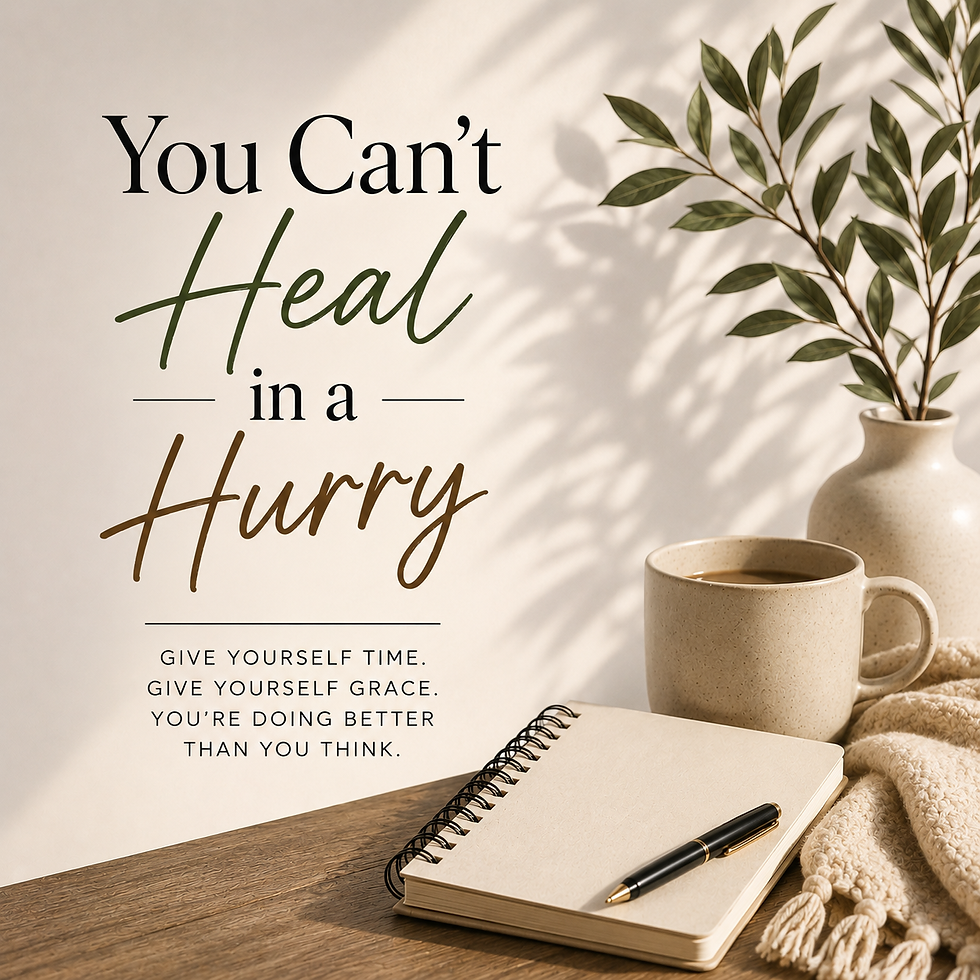
You Can't Heal in a Hurry
- YoungandHumble

- Jul 21
- 3 min read
Healing is a journey that requires patience and trust. When life brings pain, loss, or hardship, the desire to feel better quickly is natural. Yet, rushing the process often leads to frustration or incomplete recovery. The truth is, healing takes time, and understanding this can bring peace amid struggle.
Understanding the Scripture: Habakkuk 2:3 NLT
The verse from Habakkuk 2:3 in the New Living Translation says:
"Though the vision awaits its appointed time, it will surely come; it will not delay."
This scripture reminds us that some things, including healing, have a set time to unfold. The "vision" here can be seen as the promise of restoration or relief. It may not happen immediately, but it is certain to arrive when the time is right.
The verse encourages patience and faith. It acknowledges that waiting can be difficult, but it assures us that delay does not mean denial. Healing, like the vision, will come at the appointed moment.
Why Healing Cannot Be Rushed
Healing involves physical, emotional, and spiritual layers. Each layer needs its own time to mend. Here are some reasons why healing cannot be hurried:
Biological processes take time. For example, a broken bone requires weeks or months to knit together properly. Trying to rush recovery can cause setbacks.
Emotional healing requires processing. Grief, trauma, or disappointment must be felt and understood. Suppressing feelings or forcing quick fixes often prolongs pain.
Spiritual growth unfolds gradually. Trust, forgiveness, and hope develop through experience and reflection, not instant change.
Trying to speed up healing can lead to ignoring important steps. This might result in incomplete recovery or recurring issues.
Practical Ways to Embrace the Healing Process
Accepting that healing takes time does not mean passivity. There are active steps to support healing while respecting its pace:
Allow yourself to feel. Give space to emotions without judgment. Journaling or talking with a trusted friend can help.
Seek professional help when needed. Therapists, counselors, or medical professionals provide guidance tailored to your situation.
Practice self-care consistently. Rest, nutrition, and gentle exercise support physical and mental health.
Stay connected to your faith or values. Prayer, meditation, or reflection can provide strength and hope.
Set small, realistic goals. Celebrate progress, no matter how slow, to build confidence and motivation.
These actions create a foundation for healing that respects your unique timeline.
Examples of Healing in Life and Scripture
Healing stories often show the power of patience:
Physical healing: A friend recovering from surgery shared how frustration gave way to gratitude when she accepted slow progress as part of recovery.
Emotional healing: After losing a loved one, many find that grief comes in waves. Allowing time to mourn helps eventually bring peace.
Spiritual healing: Biblical figures like Job endured long seasons of suffering before restoration came, illustrating trust in God's timing.
These examples highlight that healing is a process, not an event.
Holding on to Hope During the Wait
Waiting can feel like the hardest part. Doubts and impatience may arise. Habakkuk 2:3 offers a powerful reminder: the vision will come, it will not delay. This means healing is sure, even if it seems slow.
To hold on to hope:
Focus on small signs of progress. Notice moments of relief or clarity.
Remind yourself of past challenges overcome. Your history shows resilience.
Lean on supportive relationships. Sharing your journey lightens the burden.
Keep faith in the bigger picture. Trust that healing fits into a larger plan.
Hope fuels endurance and helps maintain peace during uncertainty.
Healing is not a race. It is a steady path that requires patience, care, and faith. Habakkuk 2:3 encourages trusting the timing of healing, knowing it will come when it is ready. By embracing this truth, you can find peace in the process and strength for the journey ahead. Take the time you need, support yourself well, and hold on to hope. Healing will come.
-Stay Young. Stay Humble.



Comments